
St. Louis Tour Bus Accident Lawyer: Bi-State Common Carrier Injury Claims
A collision involving a tour bus, charter bus, or public transit vehicle is vastly different from a standard passenger vehicle crash. Because buses carry dozens of passengers and weigh up to 40,000 pounds, a single high-speed mistake on an interstate or city street can cause catastrophic, multi-party injuries. To make matters more complicated, these accidents often involve a complex web of private charter companies, interstate travel regulations, and regional government entities. Tour buses cross the bi-state region via three major interstates, however, many local charter buses operate through the greater metro area as well.
Because the St. Louis metropolitan area spans across both Missouri and Illinois, determining where your accident happened and who is responsible requires an experienced bi-state legal team. The Cagle Law Firm provides aggressive, localized advocacy to hold commercial bus carriers, private tour operators, and public transit agencies accountable for negligence
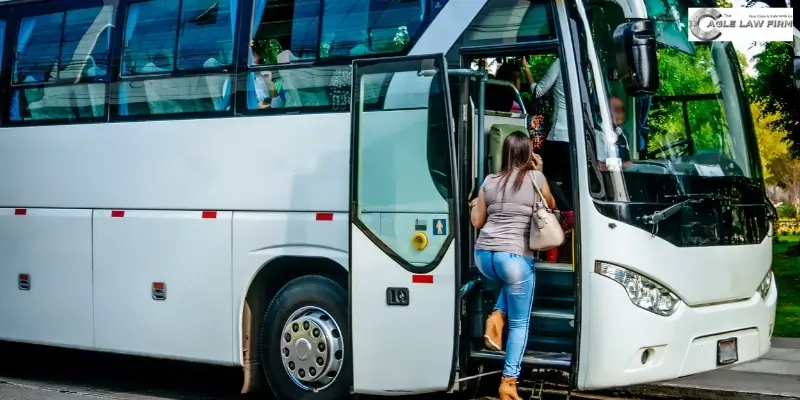
The Common Carrier Doctrine: A Higher Standard of Care
Under both Missouri and Illinois laws, commercial bus companies operate as common carriers. This classification means businesses that offer transportation services to the general public owe their passengers the highest degree of care, rather than just ordinary care. A common carrier must utilize systemic safety protocols, complete comprehensive driver background checks, and perform rigorous vehicle maintenance to prevent harm.
When a tour bus operator fails in this duty—whether due to driver fatigue, distracted driving, or mechanical failure—they can be held legally responsible for the resulting damages. Our firm routinely manages complex bus accident investigations, including:
- Private Charter & Tour Buses: Cross-country lines, winery tour shuttles, and casino buses traveling along regional interstates like I-70, I-55, and I-64.
- Intercity Motorcoaches: Long-haul commercial carriers like Greyhound and Megabus that are subject to strict federal oversight.
- School Bus Collisions: Claims involving municipal school districts and private transportation contractors across the bi-state area.
- Public Transit Accidents: Collisions involving regional public transit services, such as MetroBus and Call-A-Ride vehicles.
Public Transit Claims: Navigating Sovereign Immunity and Damage Caps
If your injury involves a public transit vehicle like a MetroBus, your case moves beyond standard commercial insurance policies and enters the realm of government liability. In the St. Louis area, public transit is managed by the Bi-State Development Agency (operating as Metro). Because Bi-State is a interstate compact entity created by Missouri and Illinois and approved by Congress, it is considered a public entity protected by sovereign immunity.
Fortunately, both states waive sovereign immunity for injuries directly caused by the negligent operation of motor vehicles by public employees. However, pursuing compensation from a public agency comes with strict limitations and condensed legal deadlines,
Missouri Public Tort Limitations
In Missouri, under (RSMo § 537.610) injury claims against public entities like the Bi-State Development Agency are subject to strict statutory damage caps. These limits are adjusted annually for inflation. For example, individual claims against the agency are legally capped at a maximum of roughly $420,000 per person, regardless of whether a jury awards a higher amount. Furthermore, while the general statute of limitations for a standard personal injury claim is 5 years, bringing a claim against a local municipal entity often requires submitting a formal administrative notice within 90 days of the incident.
Illinois Public Tort Limitations
Cross the river into Illinois, and the legal landscape shifts. Under the Local Governmental and Governmental Employees Tort Immunity Act (745 ILCS 10/8-101), you do not face the same strict damage caps for standard vehicle negligence, but your filing window is drastically shortened. You must file a formal lawsuit against a public transit entity within 1 year of the accident date, compared to the standard 2-year window for private personal injury cases.
Dangerous Bus Driving Behaviors
Like large trucks, bus drivers need a special (commercial) license to operate tour buses. Still yet, the most common cause of common carrier accidents is driver error. The dangers of operating large commercial vehicles, including blind spots, rollover potential, wide turns, difficulty braking, tire wear, and height restrictions, all require additional attention while driving. Bus drivers are also responsible for the many lives on board, and bus accidents often cause extensive damage to smaller vehicles. While a car accident may seriously injured 3-5 people, a tour bus can injure 70. Commercial drivers are held to a slightly higher standard as they drive much larger vehicles that can result in serious crashes and fatalities.
After a serious or fatal bus accident, accident reconstruction is usually critical to determine if the crash was caused by driver error or bus failure. The most common reasons include:
- Speeding
- Reckless driving (going at least 15 miles over the speed limit)
- Failing to obey traffic control devices (red lights and stop signs)
- Using a cell phone while driving
- Violating hours-of-service limits
- Driver impairment
- Bus maintenance failures
While texting and driving is strictly prohibited, distracted driving is the leading cause of motor vehicle accidents in the United States. Distracted driving is defined as any behavior that takes a driver’s mind, hands, or eyes off the road.
Federal Safety Regulations Governing Tour Buses
The Federal Motor Carrier Safety Administration (FMCSA) regulates the commercial motor vehicle industry to prevent injuries on American roadways. These regulations apply to most commercial buses, including tour buses. If a tour bus driver or company violates FMCSA regulations or state traffic laws, it may be grounds for recovering additional compensation. The following are a few examples of the FMCSA regulations applicable to commercial tour bus operations:
- Commercial driver licensing (CDL): Bus drivers suffering from hearing loss, vision loss, seizure disorders, and diabetes are generally disqualified from obtaining a CDL. They may apply for an exception, but these disqualifying medical conditions may endanger passengers. Unfortunately, many of these conditions develop as bus drivers age, and they may already have a CDL. Licensed bus drivers guilty of certain criminal or traffic violations or who have their private license suspended are also prohibited from operating a tour bus.
- Drug and alcohol testing: Commercial bus drivers are subject to strict drug and alcohol testing, especially after a tour bus accident. Your personal injury attorney has a right to request these tests to determine whether your bus driver was impaired.
- Hours of service regulations: In response to the serious accidents caused by commercial driver fatigue, all commercial drivers are subject to driving limitations. Hours of service violations are common in the commercial driving industry. Busing transportation companies may put unreasonable work requirements on drivers. Most commercial vehicles have an electronic recording device often referred to as the “black box.” It is critical to hire an attorney familiar with all FMCSA Regulations and know how to access valuable evidence.
- Equipment regulations: Due to the weight of certain commercial vehicles, bus tires, and brakes are subject to fail if not properly maintained. Tour bus companies are required to perform regular tire and equipment inspections and repairs to prevent mechanical failures. When buses are not maintained to meet regulations, catastrophic crashes can result.
- Registration and insurance requirements: Any tour bus that operates across state lines is generally required to register with the FMCSA. Further, tour buses that carry more than 16 passengers must have at least $5 million in liability insurance to compensate those injured in a tour bus accident.
Compensation Available After a St. Louis Tour Bus Crash
Tour bus owners are required to carry millions of dollars in liability insurance. Compensation may be available for the following:
- Medical bills, current and future
- Pharmaceuticals and medical equipment,
- Present and future lost wages
- Personal property damage, such as the loss of an expensive camera
- Pain and suffering
- Extreme mental anguish
- Loss of enjoyment of life
- Loss of spousal services-loss of consortium claims
The above damages are called compensatory damages because they compensate injured claimants for direct and future losses caused by the accident. Another type of damages is called punitive damages. These damages are paid to punish a party for grossly negligent, reckless, or intentionally tortious conduct. Punitive damages are seldom awarded in bus accident cases; however, there are exceptions.
Mass Casualty Insurance Claims
Tour bus companies are required to carry high levels of personal injury insurance because they transport multiple individuals at one time and charge individuals for the service. A single crash can injure dozens. It is essential in mass casualty bus crashes to contact a qualified personal injury attorney immediately after the accident. Seriously injured claimants who have legal representation are usually prioritized over individuals without attorneys. Commerical bus companies typically respond to mass casualty events with a lot of “customer service” and attempts to settle claims quickly before victims know the extent of their injuries.
Frequently Asked Questions Regarding St. Louis Bus Accidents
Q: What federal regulations apply to commercial tour bus accidents?
Private tour and charter buses operating across state lines must comply with the Federal Motor Carrier Safety Administration (FMCSA) guidelines. These regulations dictate mandatory hours-of-service (HOS) limits to prevent driver fatigue, drug and alcohol screening requirements, and electronic logging device (ELD) tracking. Our legal team immediately subpoenas these black-box logs and fleet electronic records to uncover systemic safety violations.
Q: Who can be held responsible for an injury during a charter bus trip?
Depending on the underlying cause of the accident, liability may extend to multiple defendants. This includes the bus driver for operational negligence, the charter transportation company for inadequate training, third-party maintenance contractors for mechanical failures, or the vehicle manufacturer for defective equipment like tire blowouts or braking system failures.
Contact a St. Louis Tour Bus Accident Lawyer Immediately After your Bus Crash
You probably have a lot of questions after a bi-state bus crash in Missouri or Illinois. Call The Cagle Law Firm’s dedicated St. Louis personal injury attorneys at (314) 276-1681 or contact us online today to schedule your free, no-risk tour bus accident consultation.
Book a consultation now by calling toll-free at (800) 685-3302 or locally at (314) 276-1681.
Zane T. Cagle of The Cagle Law Firm has over 20 years of proven results and working with FMCSA regulations involving commercial vehicle crash injuries across Missouri and Illinois. Our firm serves accident injury clients in St. Louis and the greater metro area including St. Louis County, St Louis City, Jefferson County, Madison County, IL and St Clair County, IL.
Contact Us Today
The Cagle Law Firm serves accident and injury clients throughout St. Louis and the greater St. Louis metro area, including St. Louis Counties of Chesterfield, Wildwood, Eureka, Ladue, Olivette, Clayton, Kirkwood, Fenton, Affton, and Jefferson Counties of Arnold, High Ridge, Antonia, House Springs, and the eastern Missouri and southern Illinois communities. If you or your family needs legal assistance with your personal injury case, call The Cagle Law Firm at (314) 276-1681 or use our online contact form to request a free case review or get more information.
Testimonials

I am a personal injury lawyer from across the state. I called Andrew Mundwiller recently to ask a few questions when I discovered he faced a similar issue in the past, to what I am handling right now. He was extremely helpful and gracious with his time. His work (which he shared with me) was very well done. I don’t personally know Mr. Mundwiller but I know a good attorney when I talk to one. When you find a good guy, who knows his stuff and does excellent work, that’s who you want to represent you.
Jonathan Lourenco
Zane Cagle was fantastic to myself and my family during such a difficult time. Always answered any questions I had and, i feel, always steered me in the right direction. I am very thankful for all his hard work and would recommend this firm to anyone at anytime. He did everything he promised and more.
Holli Huge
When my wife was involved in a car accident we contacted The Cagle Law Firm. Andrew Mundwiller represented us. We were treated with respect and felt that we really mattered. All lines of communication were kept open throughout the process and it was a painless as it could be. I would recommend The Cagle Law Firm to anyone and everyone!!
Patrick Rudolph
I would highly recommend The Cagle Law Firm to anyone in need of legal help. My experience with Zane was awesome! He took the time to explain everything that was going on, and made me feel like he had all the time in the world for my questions. He came to our home and spent time getting to know us, and I actually felt like I was dealing with a friend. Best law firm I have ever worked with!
Marcia Roberts
I would highly recommend The Cagle Law Firm to anyone in need of legal help. My experience with Zane was awesome! He took the time to explain everything that was going on, and made me feel like he had all the time in the world for my questions. He came to our home and spent time getting to know us, and I actually felt like I was dealing with a friend. Best law firm I have ever worked with!
Chelsie
Areas Served
The Cagle Law Firm – Missouri

The Cagle Law Firm – Illinois

The Cagle Law Firm – Kentucky

CONTACT THE CAGLE LAW FIRM TODAY
Request your FREE CASE REVIEW today by calling (314) 276-1681 or by sending a message through the site contact form. Your contact info stays private and is only used to reply to your inquiry.
Whether you need information about a new injury or existing injury, our lawyers answer your questions with no-risk and no followup marketing.
Free Consultations and Case Reviews
Questions? Ask An Attorney
Fields marked with an * are required

Call Us(314) 276-1681
Toll Free 1.800.685.3302


Copyright © 2026 St. Louis Personal Injury Lawyers | The Cagle Law Firm. All rights reserved.
Disclaimer | Site Map | Privacy Policy
Get a free case review with St. Louis' best personal injury lawyers to help you win top compensation