
St. Louis Highway Accident Lawyer
St. Louis Highway Accident Lawyer: Navigating Bi-State Interstate Claims
The high-speed corridors of the Greater St. Louis metropolitan area are hotspots for catastrophic, multi-vehicle collisions. Because the St. Louis transit network bridges both Missouri and Illinois borders, a single highway collision can trigger intricate jurisdictional challenges, complex accident reconstruction protocols, and conflicting state insurance statutes.
If you have sustained severe injuries or lost a loved one on a St. Louis expressway, understanding the precise geographic and legal mechanics of your crash is vital to recovering full compensation. At The Cagle Law Firm, we navigate serious injury cases for our clients in Missouri and Illinois.
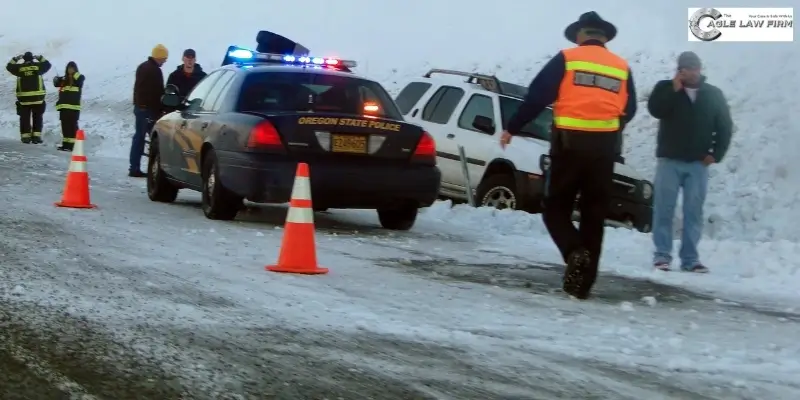
High-Risk Corridors & High-Friction Junctions in Greater St. Louis
Highway collisions differ fundamentally from surface-street accidents due to the extreme kinetic forces involved. In the St. Louis area, distinct design defects, heavy freight shipping volumes, and commuter bottlenecks create predictable high-crash zones across our major interstates:
- The Interstate 70 (I-70) Freight Corridor: Running from North St. Louis City through North County and out to St. Charles, this route mixes heavy commercial tractor-trailers with fast commuter traffic. High-risk zones include the Riverview Boulevard interchange and the express lane merges near downtown.
- The Interstate 270 (I-270) Outer Ring Belt: Famous for severe rear-end collisions and multi-car pileups, particularly within the northern loop near Florissant and the massive western commercial interchanges around Maryland Heights and Manchester Road.
- Interstate 64 (I-64 / US-40) Central Core: Dense commuter traffic traveling through the central corridor regularly experiences abrupt deceleration accidents near the Kingshighway Boulevard and Hampton Avenue ramps due to limited sight distances and rapid lane-merging configurations.
- Bi-State Bridge Transits (I-55, I-64, I-70): Accidents occurring on or near the Poplar Street Bridge, the Stan Musial Veterans Memorial Bridge, or the Jefferson Barracks Bridge involve complex jurisdictional questions regarding whether Missouri or Illinois law takes precedence.
The Physics of Highway Collisions: Deceleration Trauma
When vehicles collide at highway speeds, the transfer of kinetic energy is catastrophic. The formula governing kinetic energy illustrates why highway collisions cause permanent, life-altering bodily harm:
Because velocity is squared, doubling your speed from 35 mph to 70 mph doesn’t just double the impact force—it quadruples the kinetic energy transferred to the human body upon impact. This immense force results in specific, severe patterns of injury that demand extensive medical documentation:
- Traumatic Brain Injuries (TBI):Caused by violent coup-contrecoup motion as the brain strikes the interior of the skull during high-speed deceleration.
- Spinal Cord Trauma and Whiplash: Hyperextension and hyperflexion of the cervical vertebrae often lead to herniated discs, fractured vertebrae, or permanent paraplegia.
- Internal Organ Shearing: The rapid arresting of forward momentum causes internal organs to collide with the chest wall or abdominal cavities, causing hidden, life-threatening internal hemorrhaging.
Jurisdictional Law: Missouri vs. Illinois Fault Standards
Determining where your accident occurred is the most critical factor in establishing your financial recovery path. Both states use comparative negligence models, meaning a plaintiff’s final financial recovery is reduced by their own percentage of fault. However, the legal mechanics diverge sharply once a plaintiff crosses the 50% responsibility line
Missouri: Pure Comparative Fault
Missouri operates under a pure comparative fault system, Mo. Rev. Stat. § 537.765 which is highly favorable for keeping claims alive.
The Rule: A plaintiff can recover damages even if they are 99% at fault for the underlying incident.
The Application: The total damages awarded by a jury are simply reduced by the plaintiff’s exact percentage of liability. For example, if a jury determines total damages are $100,000 but finds the plaintiff 70% responsible (e.g., for speeding through an intersection where another driver failed to yield), the plaintiff is still legally entitled to collect $30,000.
Illinois: Modified Comparative Fault
Illinois utilizes a modified comparative fault system featuring a strict 51% bar rule, (735 ILCS 5/2-1116)
The Rule: A plaintiff is entirely blocked from recovering any compensation if their share of the liability reaches or exceeds 51%.
The Application: If an Illinois plaintiff is found 49% at fault, they successfully collect 51% of the verdict. However, if the jury shifts just a fraction more blame onto the plaintiff—finding them 51% at fault—the recovery drops instantly to $0 and the defense wins a complete dismissal.
Statute of Limitations: The Filing Deadlines
Missing a statutory filing deadline acts as an absolute bar to recovery in both states, but the baseline windows differ significantly.
Missouri: 5 Years–Mo. Rev. Stat. § 516.120
General Personal Injury: For standard negligence claims—including motor vehicle accidents and premises liability—plaintiffs historically have 5 years from the date of the injury to file a lawsuit.
2026 Legislative Context: This baseline is currently facing significant legislative pressure. The Missouri General Assembly has seen active pushes (via bills like House Bill 68) attempting to compress this 5-year window down to a 2-year or 3-year limit to match neighboring states. While the 5-year timeline remains the active law of the state for existing actions, filing strategies must account for these shifting legislative currents.
Wrongful Death Exception: If the negligence results in a fatality, the timeline drops to 3 years from the date of death (Mo. Rev. Stat. § 537.100)
Illinois: 2 Years (735 ILCS 5/13-202)
General Personal Injury: Illinois runs on a much tighter operational clock. Plaintiffs have a strict 2-year window from the exact date of the accident or injury to initiate litigation.
Government Entity Exception: If the target defendant is a local municipality, county, or state agency, the filing window shrinks further to 1 year under the Local Governmental and Governmental Employees Tort Immunity Act (745 ILCS 10/8-101)
Wrongful Death: Aligns with the personal injury timeline, requiring filing within 2 years of the individual’s date of death (740 ILCS 180/2)
The Tactical Difference: Because of the 51% bar rule, defense strategies in Illinois focus intensely on pushing the plaintiff’s contributory negligence over that majority threshold to secure a total defense verdict. In Missouri, defenses are built around a war of attrition—attempting to chip away at the plaintiff’s recovery percentage dollar-by-dollar, knowing there is no structural cliff to clear.
Bi-State Jurisdictional Comparison
| Legal Metric | Missouri | Illinois |
| Negligence Framework | Pure Comparative Fault | Modified Comparative Fault (51% Bar) |
| Max Plaintiff Fault for Recovery | 99% | 50% |
| Standard Bodily Injury Deadline | 5 Years (Subject to ongoing legislative challenge) | 2 Years |
| Wrongful Death Deadline | 3 Years from date of death | 2 Years from date of death |
| Claims Against Local Government | 90 days (Administrative notice requirement) | 1 Year (Strict statutory filing deadline) |
Expert Highway Accident Lawyer in St. Louis, MO
If you are hurt in any kind of motor vehicle accident, seeking medical help is your first objective. The second most important thing you can do to be sure you recover deserved compensation is to hire the right personal injury lawyer. At The Cagle Law Firm, we have represented catastrophically injured victims of car accident, bus accidents and truck accidents. We understand the complexity of life-changing injuries.
Call The Cagle Law Firm toll-free at (800) 685-3302 or locally at (314) 276-1681 or via our online form
Zane T. Cagle has over 20 years of proven results and working with FMCSA regulations involving commercial vehicle crash injuries across Missouri and Illinois. Our firm serves accident injury clients in St. Louis and the greater metro area including St. Louis County, St Louis City, Jefferson County, Madison County, IL and St Clair County, IL.
Relevant Case Result:
Madison County jury awards $35M in 2022 head-on collision case. Missouri Lawyers Media 9/10/25
Contact Us Today
The Cagle Law Firm serves accident and injury clients throughout St. Louis and the greater St. Louis metro area, including St. Louis Counties of Chesterfield, Wildwood, Eureka, Ladue, Olivette, Clayton, Kirkwood, Fenton, Affton, and Jefferson Counties of Arnold, High Ridge, Antonia, House Springs, and the eastern Missouri and southern Illinois communities. If you or your family needs legal assistance with your personal injury case, call The Cagle Law Firm at (314) 276-1681 or use our online contact form to request a free case review or get more information.
Testimonials

I am a personal injury lawyer from across the state. I called Andrew Mundwiller recently to ask a few questions when I discovered he faced a similar issue in the past, to what I am handling right now. He was extremely helpful and gracious with his time. His work (which he shared with me) was very well done. I don’t personally know Mr. Mundwiller but I know a good attorney when I talk to one. When you find a good guy, who knows his stuff and does excellent work, that’s who you want to represent you.
Jonathan Lourenco
Zane Cagle was fantastic to myself and my family during such a difficult time. Always answered any questions I had and, i feel, always steered me in the right direction. I am very thankful for all his hard work and would recommend this firm to anyone at anytime. He did everything he promised and more.
Holli Huge
When my wife was involved in a car accident we contacted The Cagle Law Firm. Andrew Mundwiller represented us. We were treated with respect and felt that we really mattered. All lines of communication were kept open throughout the process and it was a painless as it could be. I would recommend The Cagle Law Firm to anyone and everyone!!
Patrick Rudolph
I would highly recommend The Cagle Law Firm to anyone in need of legal help. My experience with Zane was awesome! He took the time to explain everything that was going on, and made me feel like he had all the time in the world for my questions. He came to our home and spent time getting to know us, and I actually felt like I was dealing with a friend. Best law firm I have ever worked with!
Marcia Roberts
I would highly recommend The Cagle Law Firm to anyone in need of legal help. My experience with Zane was awesome! He took the time to explain everything that was going on, and made me feel like he had all the time in the world for my questions. He came to our home and spent time getting to know us, and I actually felt like I was dealing with a friend. Best law firm I have ever worked with!
Chelsie
Areas Served
The Cagle Law Firm – Missouri

The Cagle Law Firm – Illinois

The Cagle Law Firm – Kentucky

CONTACT THE CAGLE LAW FIRM TODAY
Request your FREE CASE REVIEW today by calling (314) 276-1681 or by sending a message through the site contact form. Your contact info stays private and is only used to reply to your inquiry.
Whether you need information about a new injury or existing injury, our lawyers answer your questions with no-risk and no followup marketing.
Free Consultations and Case Reviews
Questions? Ask An Attorney
Fields marked with an * are required

Call Us(314) 276-1681
Toll Free 1.800.685.3302


Copyright © 2026 St. Louis Personal Injury Lawyers | The Cagle Law Firm. All rights reserved.
Disclaimer | Site Map | Privacy Policy
Get a free case review with St. Louis' best personal injury lawyers to help you win top compensation