
St. Louis Chemical Inhalation Injury Lawyer: Bi-State Toxic Tort Advocacy
Inhaling toxic chemicals, airborne particulates, or hazardous industrial fumes can cause immediate, irreversible damage to the human respiratory tract. For victims across the St. Louis metropolitan area, pursuing financial recovery for these injuries is uniquely complicated by our region’s geography. Because our local economy spans both Missouri and Illinois, a toxic exposure incident at an industrial facility, commercial warehouse, or shipping transit yard can involve completely different state regulations, worker options, and filing windows. Finding the right personal injury attorney can be the key to obtaining compensation.
The Cagle Law Firm provides comprehensive, legally precise representation for individuals suffering serious injuries from severe respiratory damage due to negligent chemical exposure. As a dedicated bi-state litigation firm, we understand how to cross-reference federal safety standards with the distinct tort frameworks of both Missouri and Illinois to protect your health and your financial future
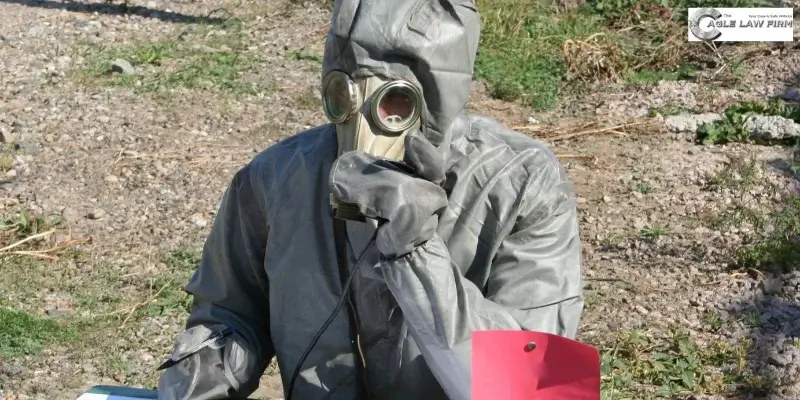
Anatomical Impact of Toxic Inhalation Injuries
Unlike external injuries, chemical inhalation damages delicate internal biological systems. Understanding exactly how these hazardous agents destroy tissue is critical to building a verifiable injury claim. Review the primary components of the human respiratory system below to understand where toxic exposure causes the most severe long-term harm
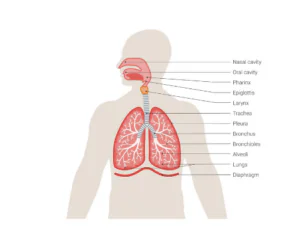
As detailed in the medical blueprint above, an inhalation injury can damage multiple points along the respiratory tract simultaneously. Soluble gases may burn the upper airway, including the nasal cavity, pharynx, and larynx. Finer, toxic particulates and heavy industrial vapors often bypass these natural filters completely, traveling down the trachea and into the deep bronchi, bronchioles, and alveoli where oxygen exchange occurs. Over time, this deep-tissue exposure can cause permanent conditions such as reactive airways dysfunction syndrome (RADS), toxic pulmonary edema, chronic bronchitis, or fatal pulmonary fibrosis.
Navigating Bi-State Jurisdictions: Missouri vs. Illinois Toxic Exposure Claims
The St. Louis metro area is home to dense industrial zones, manufacturing centers, and refining operations distributed across both sides of the Mississippi River—from the manufacturing corridors of St. Louis County to the heavy industrial refineries and chemical facilities of the Illinois Metro East (including East St. Louis, Granite City, and Wood River). If you are exposed to hazardous substances, your path to financial recovery changes completely based on where the exposure occurred.
Missouri Chemical Exposure Laws & Requirements
- The Workers’ Compensation “Prevailing Factor” Standard: If your chemical inhalation occurred in a Missouri workplace, your claim must navigate Section 287.020 RSMo. Missouri law strictly dictates that the workplace accident or exposure must be the “prevailing factor” (the primary cause relative to any other factor) in creating both the medical condition and the resulting disability.
- Third-Party Liability and Toxic Torts: If your exposure was caused by an outside contractor, a defective safety product, or a negligent commercial entity operating near your residential neighborhood, you can file a third-party personal injury lawsuit. Missouri utilizes a pure comparative fault model, meaning you can recover damages even if you are partially at fault, though your compensation is scaled down by your percentage of responsibility.
- Statute of Limitations: For standard personal injury claims based on a sudden chemical release, Missouri provides a five-year filing window from the date of the accident. However, for latent occupational illnesses that develop over years of low-level exposure, the timeline can become highly technical, requiring an immediate legal audit.
Illinois Chemical Exposure Laws & Requirements
- The Illinois Occupational Diseases Act (820 ILCS 310/): Unlike standard injury frameworks, workplace toxic exposure in Illinois often falls under this specialized statutory act. It covers illnesses caused by environmental hazards peculiar to the workplace. The timeline to report an illness to your employer is strict, and a claim must generally be filed within three years of disablement.
- Modified Comparative Fault (The 51% Bar Rule): If your toxic tort claim is litigated as a civil lawsuit in Illinois (735 ILCS 5/2-1116), you can only recover financial damages if your shared responsibility for the exposure is 50% or less. If a court finds you 51% or more responsible, you are completely barred from recovering compensation.
- Two-Year Statute of Limitations: Illinois enforces a significantly shorter civil filing window than Missouri. Under 730 ILCS 5/, a standard personal injury lawsuit must be filed within two years of the date the injury occurred or was discovered.
Critical Evidence in Toxic Inhalation Cases
Because chemical gases and vapors dissipate rapidly, our bi-state legal investigators move immediately to preserve vital environmental and medical proof, including:
- OSHA and EPA Incident Reports: Reviewing federal and state workplace safety inspections, air quality monitoring logs, and citations issued to the negligent facility.
- Material Safety Data Sheets (MSDS): Establishing the exact chemical composition, toxicity parameters, and mandatory safety controls of the compound you inhaled.
- Pulmonary Function Testing (PFT): Securing advanced diagnostic metrics (such as spirometry and lung volume measurements) to programmatically demonstrate the long-term impact on your breathing capacity.
Frequently Asked Questions About Cross-Border Chemical Injuries
Q: What if I live in Missouri but was exposed to chemicals at an industrial plant in Illinois?
Because the physical incident occurred on Illinois soil, your claim will generally be governed by Illinois tort law or the Illinois Workers’ Compensation Commission. Navigating this cross-border dynamic requires a legal team actively licensed and practicing inside the local courts of both states.
Q: Can a community file a lawsuit for a chemical leak that didn’t happen at a workplace?
Yes. When a commercial entity or transport truck leaks toxic materials into local air or groundwater, affected residents can file a private toxic tort or environmental litigation lawsuit to seek compensation for medical monitoring, health damages, and property devaluation.
Connect with a Proven Bi-State Serious Injury Representative
Do not let complex cross-border legal structures or technical medical terminology prevent you from securing accountability. Ensure your case is handled by a legal team with proven authority across the entire St. Louis bi-state region. Contact The Cagle Law Firm today for a comprehensive, no-cost evaluation of your toxic inhalation claim.
We represent victims of toxic exposure in Missouri, Illinois, Kentucky and across the United States.
For a free case evaluation, call The Cagle Law Firm now at (314) 276-1681 or use our online contact form.
Zane T. Cagle of The Cagle Law Firm has over 20 years of proven results and working with families dealing with chemical exposure across the United States. Our firm serves accident injury clients in St. Louis and the greater metro area including St. Louis County, St Louis City, Jefferson County, Madison County, IL and St Clair County, IL. As well, we represent those injured in chemical exposure cases in Kentucky and across the United States.
Related Videos:
- “What are the symptoms of a respiratory injury?” | The Cagle Law Firm
- “What information does my attorney need to know to handle my case? | The Cagle Law Firm
- “What is the difference between Mesothelioma and other respiratory diseases?” |The Cagle Law Firm
- “If I wore respiratory protection at work, how can I still have an illness? | The Cagle Law Firm
Contact Us Today
The Cagle Law Firm serves accident and injury clients throughout St. Louis and the greater St. Louis metro area, including St. Louis Counties of Chesterfield, Wildwood, Eureka, Ladue, Olivette, Clayton, Kirkwood, Fenton, Affton, and Jefferson Counties of Arnold, High Ridge, Antonia, House Springs, and the eastern Missouri and southern Illinois communities. If you or your family needs legal assistance with your personal injury case, call The Cagle Law Firm at (314) 276-1681 or use our online contact form to request a free case review or get more information.
Testimonials

I am a personal injury lawyer from across the state. I called Andrew Mundwiller recently to ask a few questions when I discovered he faced a similar issue in the past, to what I am handling right now. He was extremely helpful and gracious with his time. His work (which he shared with me) was very well done. I don’t personally know Mr. Mundwiller but I know a good attorney when I talk to one. When you find a good guy, who knows his stuff and does excellent work, that’s who you want to represent you.
Jonathan Lourenco
Zane Cagle was fantastic to myself and my family during such a difficult time. Always answered any questions I had and, i feel, always steered me in the right direction. I am very thankful for all his hard work and would recommend this firm to anyone at anytime. He did everything he promised and more.
Holli Huge
When my wife was involved in a car accident we contacted The Cagle Law Firm. Andrew Mundwiller represented us. We were treated with respect and felt that we really mattered. All lines of communication were kept open throughout the process and it was a painless as it could be. I would recommend The Cagle Law Firm to anyone and everyone!!
Patrick Rudolph
I would highly recommend The Cagle Law Firm to anyone in need of legal help. My experience with Zane was awesome! He took the time to explain everything that was going on, and made me feel like he had all the time in the world for my questions. He came to our home and spent time getting to know us, and I actually felt like I was dealing with a friend. Best law firm I have ever worked with!
Marcia Roberts
I would highly recommend The Cagle Law Firm to anyone in need of legal help. My experience with Zane was awesome! He took the time to explain everything that was going on, and made me feel like he had all the time in the world for my questions. He came to our home and spent time getting to know us, and I actually felt like I was dealing with a friend. Best law firm I have ever worked with!
Chelsie
Areas Served
The Cagle Law Firm – Missouri

The Cagle Law Firm – Illinois

The Cagle Law Firm – Kentucky

CONTACT THE CAGLE LAW FIRM TODAY
Request your FREE CASE REVIEW today by calling (314) 276-1681 or by sending a message through the site contact form. Your contact info stays private and is only used to reply to your inquiry.
Whether you need information about a new injury or existing injury, our lawyers answer your questions with no-risk and no followup marketing.
Free Consultations and Case Reviews
Questions? Ask An Attorney
Fields marked with an * are required

Call Us(314) 276-1681
Toll Free 1.800.685.3302


Copyright © 2026 St. Louis Personal Injury Lawyers | The Cagle Law Firm. All rights reserved.
Disclaimer | Site Map | Privacy Policy
Get a free case review with St. Louis' best personal injury lawyers to help you win top compensation